
How to Choose the Right Air Duct Cleaning Company in Taylorsville
Any company can buy a shop vac and a logo. The difference between a real duct cleaning operation and a weekend side hustle shows up in three places: the equipment they bring, whether they inspect before they quote, and what they do when they find a broken duct mid-job. Most homeowners never ask about any of it. This guide turns those three questions into a five-minute checklist you can run over the phone before anyone sets foot in your house.
If you’d rather skip the vetting and talk to us directly, call (833) 468-5997.
What equipment should a Taylorsville duct cleaning company actually bring?
Look for a truck-mounted unit or a high-capacity portable vacuum rated at a minimum of 4,000 to 6,000 CFM with HEPA filtration. That’s the floor, not the ceiling. A shop vac pulls maybe a fraction of that airflow and exhausts fine dust straight back into the room it’s supposed to be cleaning.
Why does the number matter so much in Taylorsville? Winter inversions settle particulate matter over the valley and it doesn’t leave quickly. That fine dust works its way into return ducts and settles on the walls of the duct runs. A weak vacuum stirs it up without capturing it. A properly rated unit with HEPA filtration holds the debris it dislodges instead of redistributing it through your living room.
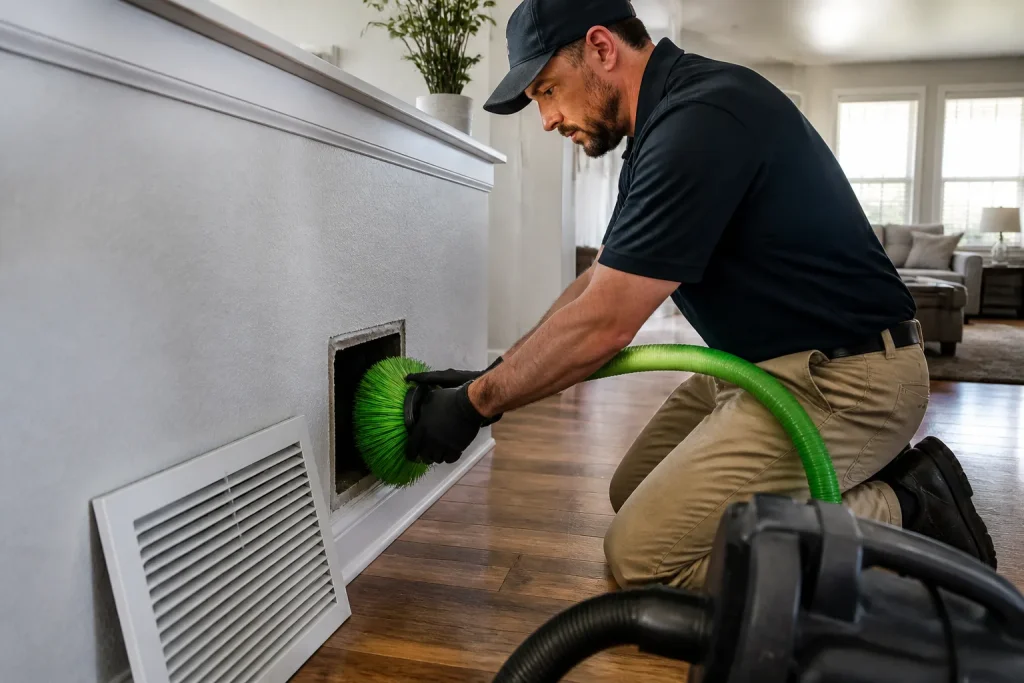
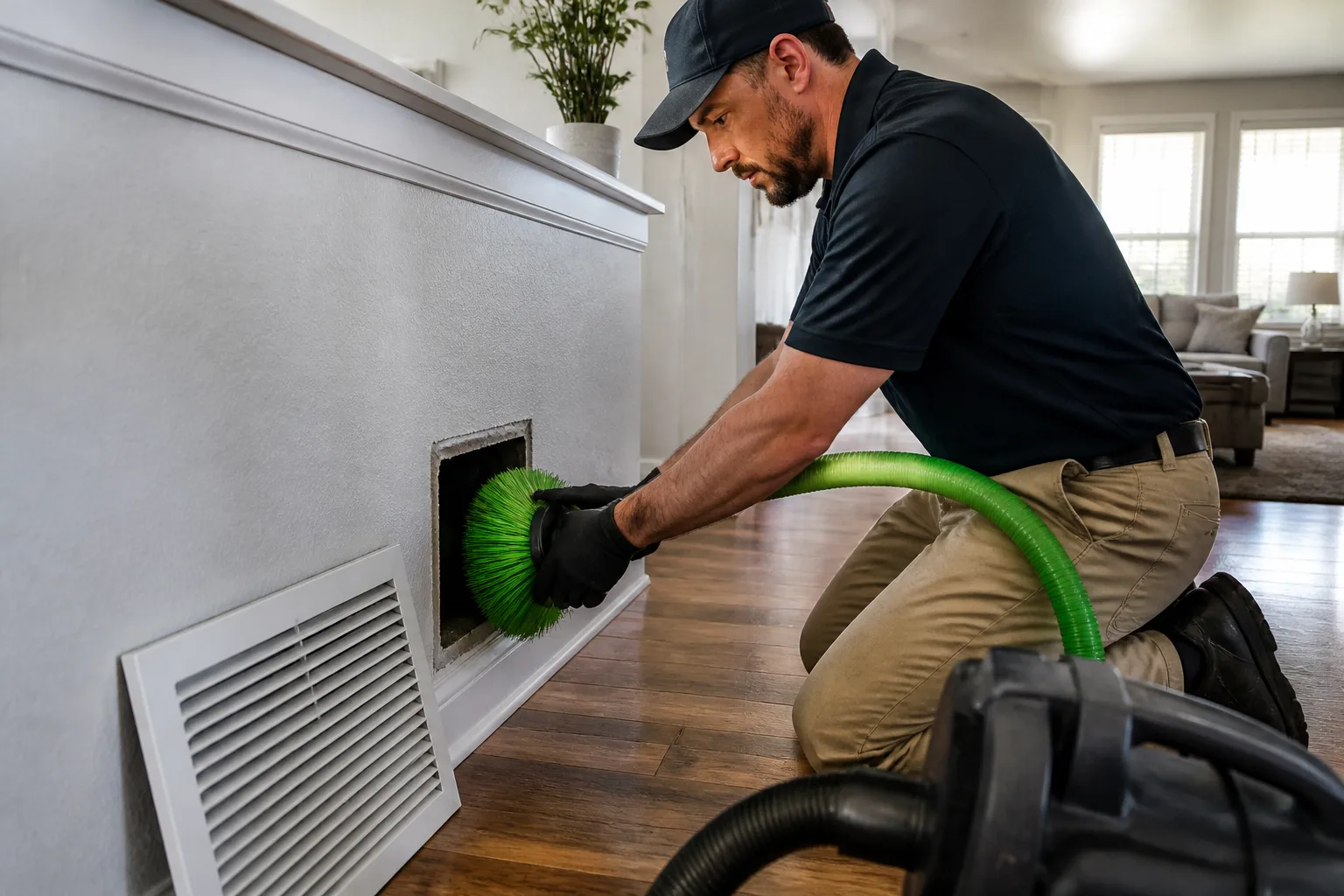
The cleaning head matters too. Rotary-brush systems dislodge compacted debris from duct walls in a way that a plain vacuum hose can’t. Ask what brush platform they use. At Taylorsville Air Duct Cleaning Pros we run Rotobrush rotary-brush systems paired with Nikro HEPA-rated vacuums, and we deploy Abatement Technologies air filtration during service to keep the work area air clean while we’re in it. Those are the same equipment platforms commercial contractors use, and naming them is how you separate a specialist from a generalist.
Ask one follow-up question: “Can you show me the equipment when you arrive?” A legitimate company says yes without hesitating.
Why should a company inspect before quoting?
A company that quotes over the phone without looking inside your system is guessing. Duct systems in Taylorsville homes vary widely depending on build era and how many renovations the house has been through. Some runs are clean. Some have years of settled construction dust, pet hair, or a disconnected section hidden above a ceiling.
An inspection-first process looks like this:
- They open access points and look into the main trunk and several branch runs.
- They check the air handler and the return side, not just the supply vents.
- They give you a written scope based on what they actually saw.
- They tell you what they found before work starts.
If a company won’t inspect, they can’t scope. If they can’t scope, the price is either a teaser that grows once they’re on site or a flat number that doesn’t match the job. Either way you lose. “See what’s in your ducts” should be a literal invitation, not a slogan. A specialist wants you looking at the camera feed with them.
If you want to compare what a proper inspection-led air duct cleaning visit involves, that page lays out the steps.
What should you verify about licensing and insurance in Utah?
Ask for the company’s Utah contractor registration and verify it yourself on DOPL, the state Division of Occupational and Professional Licensing. That takes about two minutes and it’s the single easiest way to filter out operators who aren’t registered at all. The registration should match the business name on the estimate.
Insurance is the second check. Ask for a certificate of general liability coverage and confirm it’s current. A reasonable general liability minimum for in-home contracting work is $1 million per occurrence; anything less and a damaged duct run or a scuffed air handler becomes your problem to fund. For any company sending employees into your home rather than solo operators, ask whether they carry workers’ comp. If a technician is injured on your property and the company has no coverage, the exposure can follow the homeowner.
None of this is rude to ask. A company that does this work properly keeps the paperwork ready because they get asked.
“Licensed and insured as their state requires” is a phrase you’ll hear a lot. Verify it rather than accept it. The state database and the certificate are the ground truth.
The “what happens next” test
This is the question that separates a cleaning crew from a full-system specialist. Ask: “What do you do if you find a disconnected duct, a collapsed flex section, or mold during cleaning?”
Listen for the answer.
- Cleaning crew: “We clean around it” or “we’ll note it on the report.” They finish the vacuuming, hand you a form, and leave you to find a repair contractor.
- Full-system specialist: they describe stopping, showing you what they found, and explaining repair options before anything else proceeds.
Duct Repair & Sealing is where most air loss and contamination problems actually originate. A disconnected run in an attic or a collapsed flex section is a direct path for unfiltered air and dust to enter the system. Cleaning the ducts without sealing the break means you’re cleaning a system that immediately re-contaminates itself.
We repair what we find. Our Duct Repair & Sealing service exists because stopping at surface cleaning doesn’t solve the problem. When we find mold, we talk about sanitizing as a separate step; when we find a break, we scope the repair before we finish. That’s the standard to hold any company to, ours included.
How do you spot fake reviews and weak credentials?
Reviews are easy to game. Complaint history is not. A few signals are harder to fake than a five-star rating:
- BBB complaint history and response pattern. Look at how the company handled complaints, not just the rating.
- NADCA membership. Membership in the National Air Duct Cleaners Association signals a company has committed to an industry standard of practice. It’s a membership, not a certification, but it filters out the fly-by-night operators.
- Before-and-after documentation. Ask whether they photograph their own work. A company that documents the inside of your ducts before and after gives you something to verify against.
- Written scope and price before work starts. One flat price per system, agreed in writing, with no per-vent billing. That’s the structure that prevents the coupon-to-invoice surprise.
Together these signals tell you more than a star average. A company with a clean complaint record, real industry membership, and a practice of documenting its own work is demonstrating process, not marketing.
When should you call a pro instead of waiting?
Not every dusty register needs a full cleaning. But some signs point to a system problem a vacuum can’t fix. Call a professional if you notice musty odors that return after cleaning, visible dust blowing from supply registers right after a filter change, uneven airflow between rooms, or allergy symptoms that worsen indoors through the winter inversion months.
For property managers in Taylorsville, unit turnover is the practical trigger. A documented cleaning and inspection between tenants protects the deposit conversation and the next occupant’s air quality at the same time. For homeowners, a professional cleaning after a major renovation or before moving into an older home makes sense because the inspection will tell you what you inherited.
If you want to bundle services, a reputable provider handles dryer vent cleaning and HVAC cleaning in the same visit, and we integrate Honeywell and Aprilaire air-quality components when a system needs ongoing filtration rather than a one-time clean. Air quality you can measure, not just feel.
The Bottom Line
Vet for three things: equipment rated for the job, an inspection before any quote, and a clear answer about what happens when they find a problem. Verify the DOPL registration, ask for the insurance certificate, and check the complaint history rather than the star rating. A company that clears all of that is a specialist. One that clears none of it is a gamble.
If you’re in Taylorsville and need help, Taylorsville Air Duct Cleaning Pros offers free estimates. Call (833) 468-5997. We answer 24/7. Fast dispatch from 7am to 7pm, Sunday through Friday.
Frequently Asked Questions
Ask for before-and-after photos of your own duct runs, taken during the job. A company with a real inspection-and-documentation process will show you the inside of the system before and after, and you can ask to see it in person. If a company finishes without showing you anything, ask what documentation they keep. For an exact quote on a documented cleaning, call (833) 468-5997. Estimates are free.
Cheap quotes usually come from a low teaser price that grows once the technician is on site, or from a company using consumer-grade vacuums that don’t actually capture fine dust. Ask what CFM rating their vacuum is and whether it’s HEPA filtered. Ask whether the price is one flat price per system or a per-vent charge. Call (833) 468-5997 for a written scope before you book anyone.
Ask five questions: what equipment they bring and its CFM rating, whether they inspect before quoting, whether they’re registered with DOPL, whether they carry general liability and workers’ comp, and what they do if they find a disconnected duct or mold. Their answers tell you if you’re hiring a specialist or a side hustle. Call (833) 468-5997 and we’ll walk you through ours.
Most homes do fine with cleaning every few years, and some can go longer depending on pets, renovation history, and filter habits. The winter inversion period concentrates particulate in the valley, so if you notice dust returning quickly after a filter change, that’s a reason to have the system inspected. Call (833) 468-5997 for an inspection and a written scope.
Written by the team at Taylorsville Air Duct Cleaning Pros.
Need Air Duct Cleaning Help?
Call Taylorsville Air Duct Cleaning Pros - the local pro we connect you with is licensed and insured, with free written estimates in Taylorsville.
(833) 468-5997