
Last updated November 23, 2026
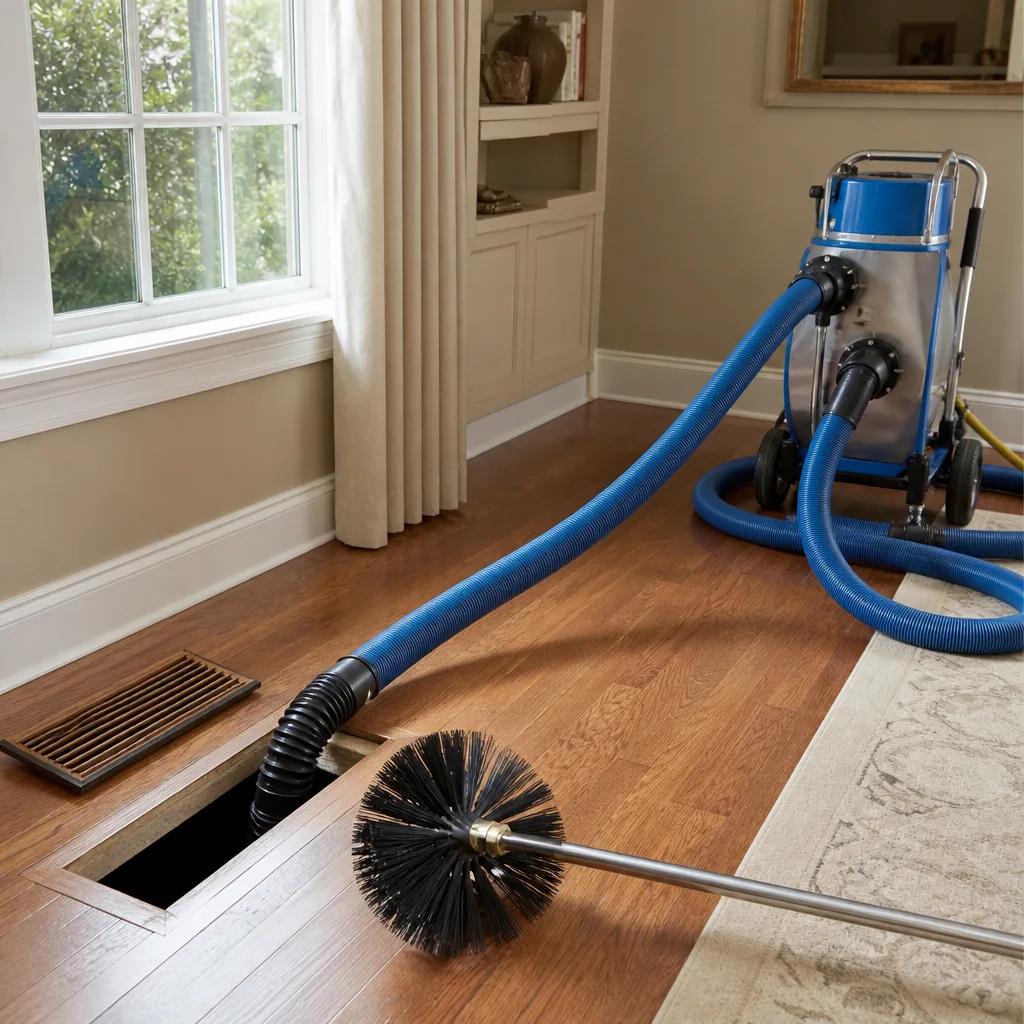 Whole-home duct cleaning
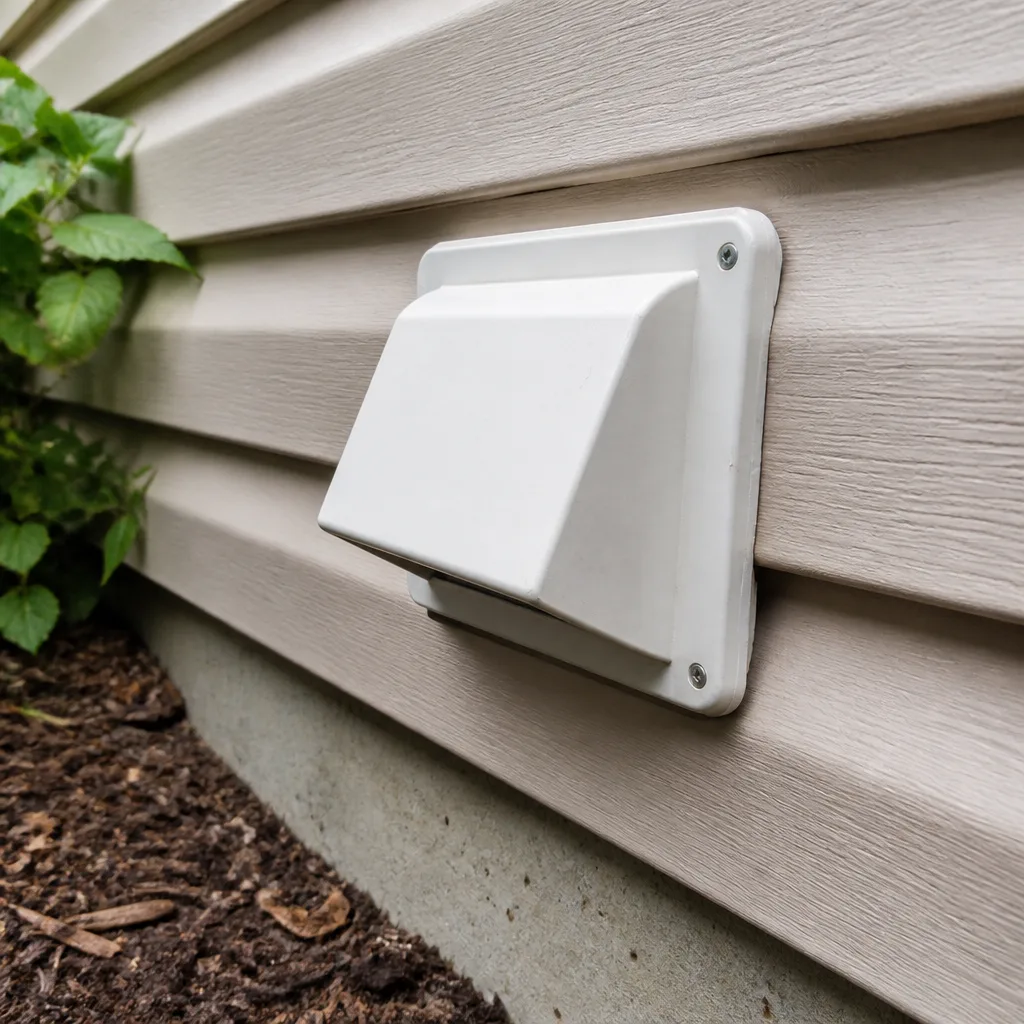 Dryer vent cleaning
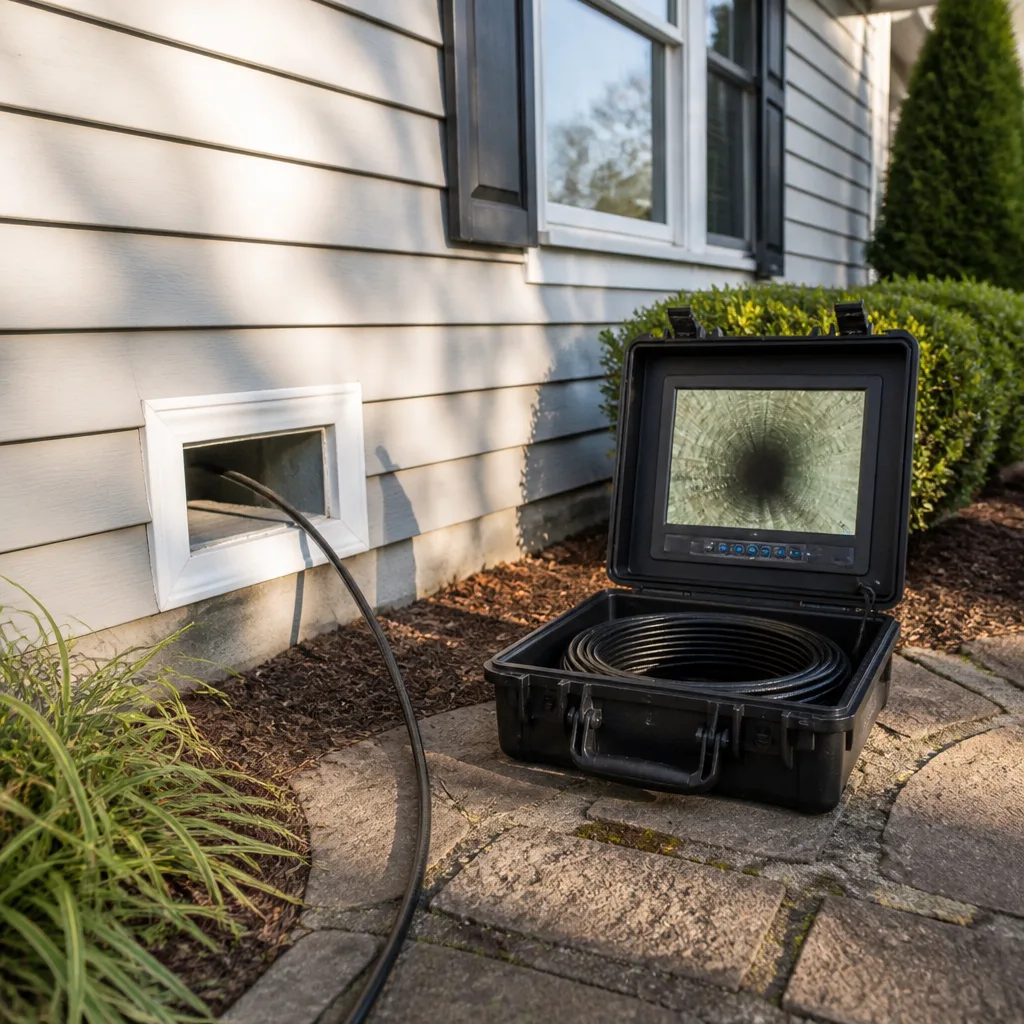 Camera inspection
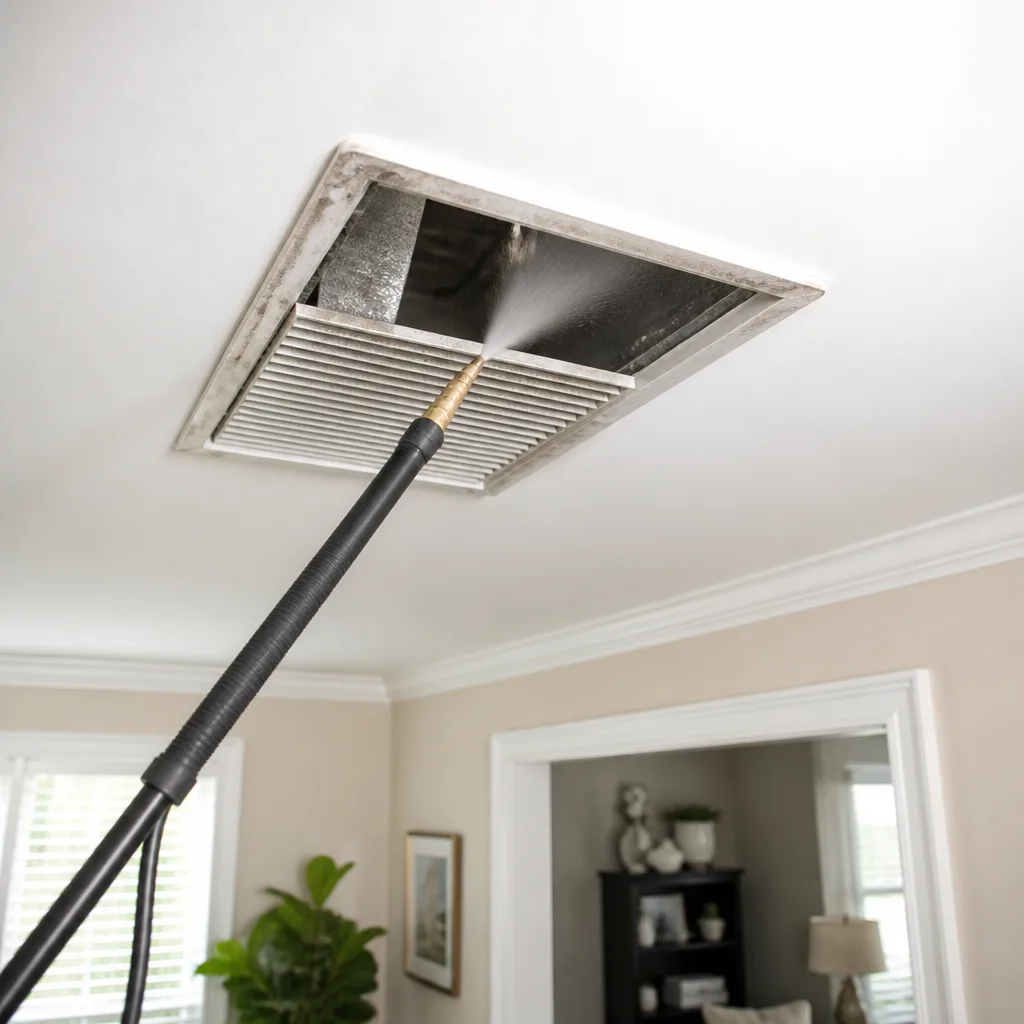 Sanitizing & deodorizing
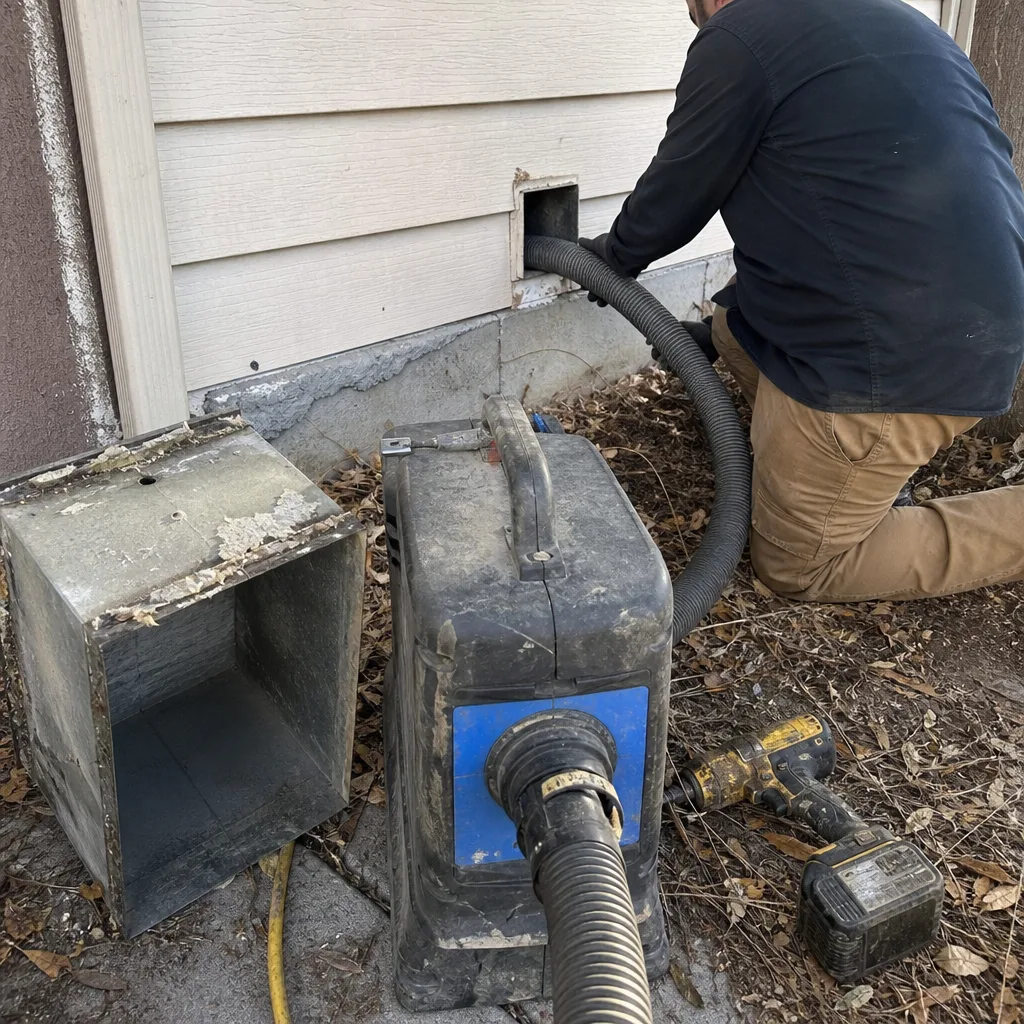
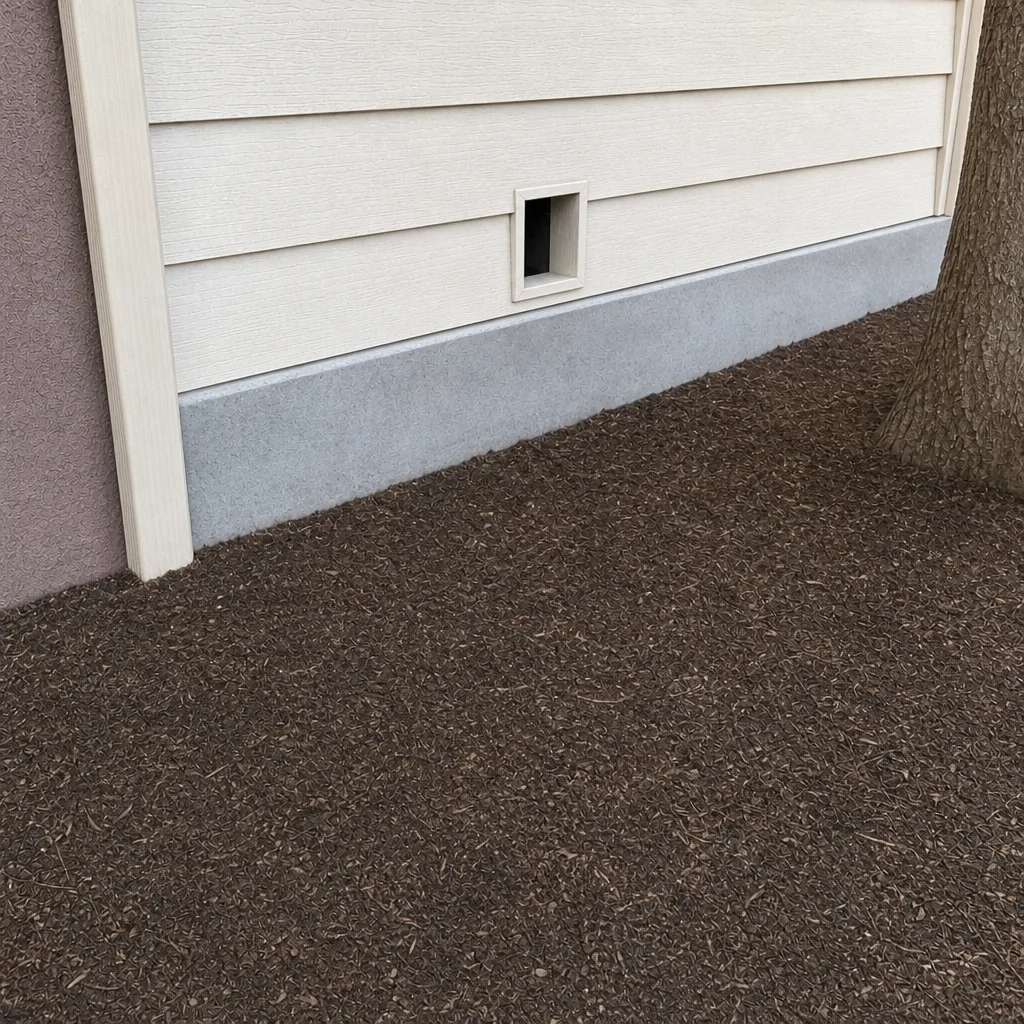
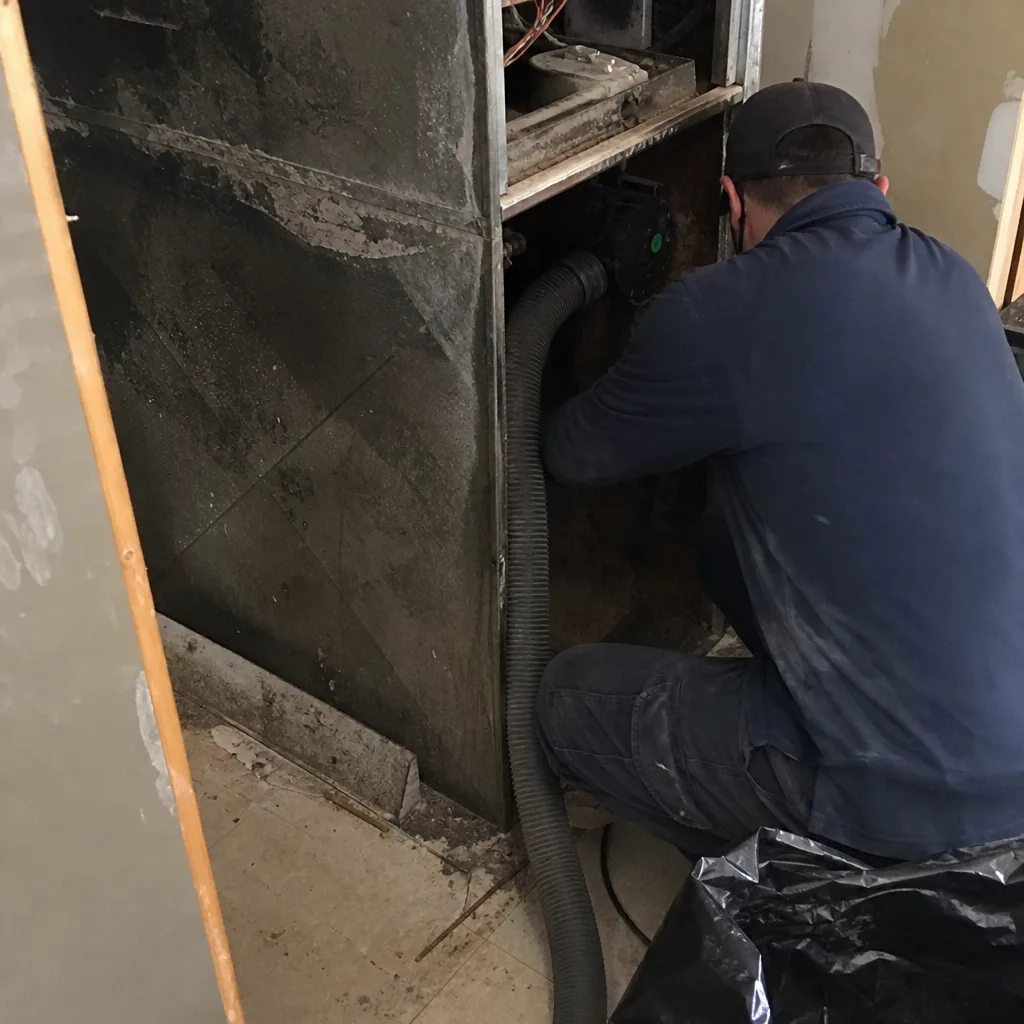
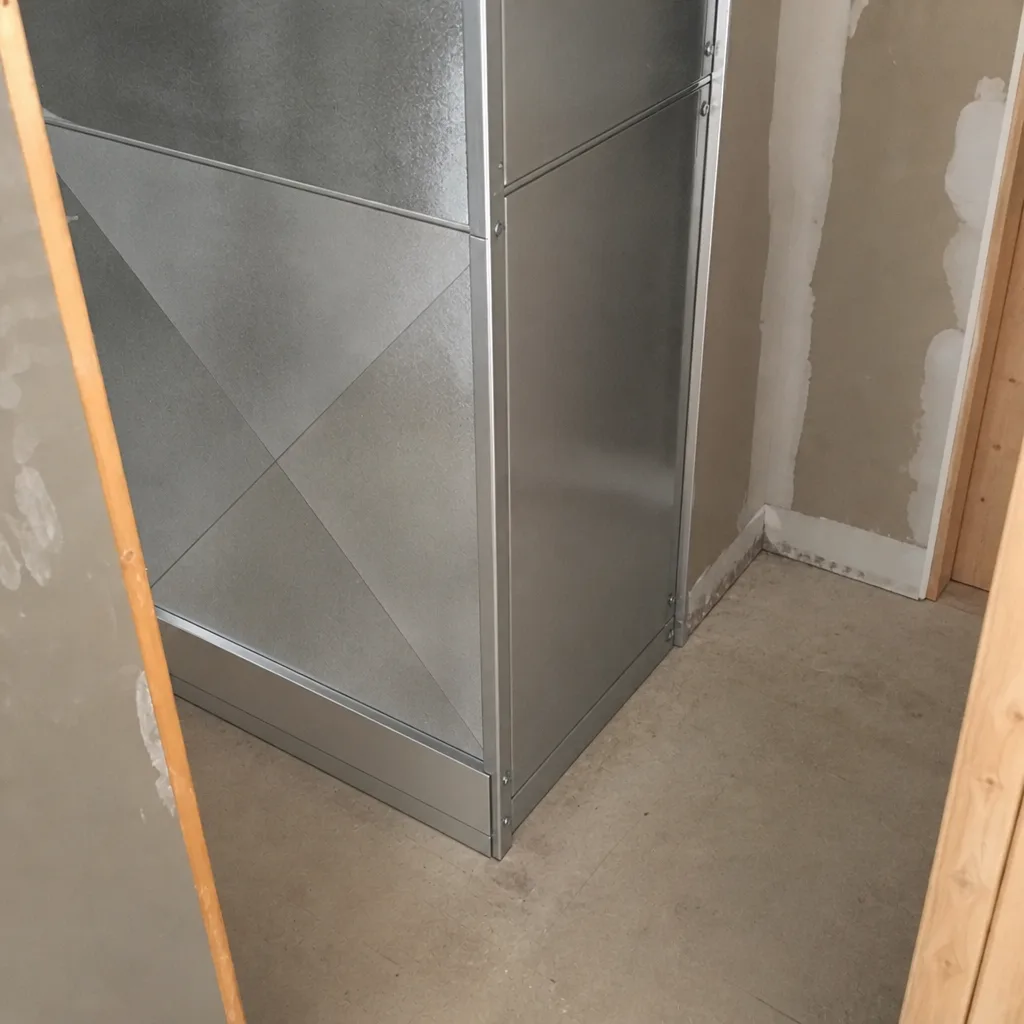
Whole-system duct and dryer vent check with before-and-after photos - you see exactly what came out of your vents
That "$99 whole-house special" is a bait ad - the real number appears once they are in your hallway, or the "clean" is a shop-vac at the register. We photograph the inside of your ducts before and after instead.
The Complete Guide to Air Duct Cleaning in Taylorsville
Most homeowners picture duct cleaning as a big vacuum sweeping through the vents and calling it done. That picture is wrong, and it’s the reason so many people feel no difference afterward. A forced-air system is an ecosystem: supply registers, return grilles, trunk lines, branch runs, the blower, the evaporator coil, and the drain pan all pass the same air, and cleaning one part while ignoring the rest just moves the problem around. This guide shows you what a genuinely complete clean covers in a Taylorsville home, how Utah’s inversion season loads duct interiors faster than you’d expect, and how to verify that the work actually reached your whole system instead of the first few feet.
Quick Answer
A complete air duct cleaning in Taylorsville means source removal, not a blow-out: a technician inspects the system first, then uses rotary-brush and HEPA vacuum equipment to dislodge and capture debris from the duct walls, and finishes by cleaning the blower, coil, and drain pan. Cleaning the ducts alone leaves the air handler components untouched, which is where a lot of the buildup actually lives. Full-system service with inspection, cleaning, and sealing addresses the whole path the air travels.
Styles & brands we work with
- Whole-home duct cleaning
- Dryer vent cleaning
- Camera inspection
- Sanitizing & deodorizing
Table of Contents
- What a Full-System Clean Actually Includes
- How Taylorsville’s Inversion Season Fills Ducts Faster
- Source Removal vs. Blow-Out: How to Tell the Difference
- Why Inspection Has to Come Before Cleaning
- How to Verify the Cleaning Was Complete
- What Air Duct Cleaning Costs in Taylorsville
- How Often Should You Clean Your Ducts?
- How to Choose a Duct Cleaning Company in Taylorsville
What a Full-System Clean Actually Includes
When people search for air duct cleaning, they usually mean the vents and the runs behind them. In a Utah forced-air home, that’s only part of the job. The air that leaves your registers has just passed through the return grilles, the blower, and the evaporator coil. If the coil has a dust mat on it and the drain pan has standing water and biofilm, you’ve cleaned the hallway and left the kitchen dirty.
Here’s what a genuinely complete service touches:
- Supply registers and branch runs. The visible vents and the smaller round or rectangular ducts feeding each room.
- The main trunk line. The large duct the branches connect to, where heavier debris settles over time.
- Return grilles and return ducts. The pull side of the system, often the dirtiest because it draws in room air directly.
- The blower wheel. A dusty blower throws unbalanced air and loses efficiency; cleaning brings airflow back.
- The evaporator coil and drain pan. Dust binds to a wet coil, and a clogged pan can back up and cause water damage.
- Air handler cabinet and filter slot. Where fine particulate collects and where a leaking filter lets unfiltered air slip past.
We use HVAC cleaning to describe this wider scope because it reflects what the equipment and the process are actually doing. In our experience, homes in Taylorsville with a matted coil show a bigger difference after service than homes where only the ducts were vacuumed. That’s the gap between a full-system intervention and a surface wipe-down.
How Taylorsville’s Inversion Season Fills Ducts Faster
You’ve seen the brown-gray haze settle into the valley on still winter days. That’s temperature inversion: a layer of warmer air traps colder air and its pollution down low in the basin, and the particulates stay put until the weather shifts. For a forced-air system, an inversion isn’t just a view problem. Every cubic foot of air your furnace pulls in during those weeks carries a higher load of fine particulate, and your filter catches what it can before the rest travels into the plenum and coats the insides of the ducts.
What that means in practice for a Taylorsville home:
- Duct interiors accumulate particulate faster during a heavy inversion winter than the general “clean every few years” guidance assumes.
- Homes near busy roads or older industrial corridors see more buildup per season than homes on the east bench.
- A dirty filter plus a stretch of inversion days pushes unfiltered air deeper into the system; swapping filters on schedule matters more here than in a low-particulate climate.
This is why we treat cleaning as one piece of ongoing air management. Installing and servicing Honeywell and Aprilaire filtration components puts real media between the outdoor air and your ducts, and a properly fitted filter is worth more over a Taylorsville winter than any single cleaning event. If you can see a dark ring of dust around your return grille in January or February, that’s the season doing its work. Cleaning without better filtration just resets the same clock.
Source Removal vs. Blow-Out: How to Tell the Difference
Source removal means dislodging the debris from the duct walls and capturing it at the source with a HEPA-rated vacuum. Blow-out means pushing compressed air through the ducts and hoping the dust exits somewhere. They are not the same service, and the gap shows up in your indoor air for weeks.
Source removal follows a defined sequence:
- Put the system under negative pressure so displaced debris travels to the vacuum, not into the room.
- Use a rotary brush on a flexible whip to scrub the duct walls, breaking the compacted film that a straight vacuum leaves behind.
- Work the branches and trunk in order, capturing fine particulates at the source as the brush runs.
- Clean the components on the air handler (blower, coil, pan) once the ductwork is clear.
- Inspect again to confirm the walls are clean before reassembling.
The equipment matters. We run Rotobrush rotary-brush systems and Nikro HEPA-rated vacuums because they’re the platform used in commercial and industrial duct work, not consumer-grade shop vacs. We also run Abatement Technologies air-filtration equipment during service so any particulate knocked loose is captured in real time, not left in the air for your family to breathe. A company that arrives with a shop vac and a hose and no negative-pressure setup is not doing source removal, whatever the invoice says.
Why Inspection Has to Come Before Cleaning
Cleaning blind is a real risk. Inside a duct system you have flex duct that can collapse or tear, disconnected joints behind a wall, and, in a home that’s had a moisture problem, pockets of mold growing on the duct lining. If a technician brushes and vacuums without a camera inspection first, one of two bad things happens: a collapsed run gets missed entirely and stays blocked, or a mold colony gets disturbed and the spores blow through every room in the house.
An inspection on a Taylorsville system should check:
- Every register and return for airflow and visible debris.
- The trunk line and accessible branch runs for crushed or disconnected flex duct.
- The evaporator coil, blower, and drain pan for dust load, standing water, or biofilm.
- Any signs of moisture intrusion or musty odor, which point to a sanitizing step before cleaning.
When we find damage, we fix it as part of the job. Duct Repair & Sealing isn’t an add-on tacked onto the bill; it’s the logical next step after a cleaning reveals the leak that was letting unfiltered attic or crawlspace air into the system all along. Sealing leaky joints and repairing crushed runs is what stops the contamination from coming right back. We repair what we find so the cleaning actually holds.
How to Verify the Cleaning Was Complete
You don’t have to take a technician’s word for it. A careful crew leaves a clean system you can check yourself, and a few checkpoints will tell you whether the job was real.
- Look inside a register with a flashlight. After cleaning, the duct wall should show clean sheet metal or a clean lining, not a fresh coat of dust.
- Check the return grille and filter slot. These should be clean, and a new or properly seated filter should be in place.
- Look at the drain pan. It should be dry and clear of standing water or slime; a wet pan means the coil wasn’t touched.
- Ask for before-and-after photos. Any honest company will have them; if they can’t show you pictures of your own ducts, that’s a red flag.
- Check airflow at the farthest register. A full-system clean often restores flow at the register that was always a little weak.
- Do a sniff test. A musty or dusty smell should be noticeably lighter, or gone entirely if you also had sanitizing.
We build these checks into our process so you can run them the moment we leave. If you can’t verify the work, you probably didn’t get it.
What Air Duct Cleaning Costs in Taylorsville
Duct cleaning in Taylorsville is priced per system, not per vent. That’s an important distinction, because per-vent pricing is the classic bait-and-switch: a low teaser number in an ad, then a much larger invoice once the count of vents is added up on site. A whole-system price agreed before any work starts is the honest way to structure it.
Typical estimated ranges in the Taylorsville market:
- Standard air duct cleaning (whole system): a single flat price for a typical single-family home, quoted after inspection.
- Dryer vent cleaning: a flat price per vent run; dryer vent cleaning is a separate, safety-critical service.
- Furnace and air handler cleaning: quoted with the duct cleaning or on its own, based on what the inspection shows.
- Duct repair and sealing: priced per job after a technician confirms what needs fixing.
- Sanitizing: an added step priced as part of the whole-system quote.
We don’t quote a price over the phone. An honest range starts with an inspection, and your written estimate sets the final price. When a company can’t tell you a number until they see the system, that’s not evasive, it’s accurate. Get an estimate before work starts and you won’t be surprised by the invoice.
How Often Should You Clean Your Ducts?
For a Taylorsville home on a forced-air system, a reasonable interval is every three to five years, and often sooner if the house sits on a busy road, has pets, or has had a recent renovation. The inversion season adds to the load, so homes that run the furnace hard through the winter often fall on the shorter end of that range.
Push the cleaning to the front of the list if you notice any of these:
- Visible dust streaks around supply registers or return grilles.
- A musty or dusty smell when the furnace first kicks on for the season.
- Allergy symptoms that get worse when the system runs.
- Uneven airflow between rooms, which points to a blockage or a collapsed run.
- After any renovation that kicked up drywall dust, or after moving into a home with an unknown maintenance history.
A new filter schedule plus a cleaning every few years does more for the air than a big cleaning every decade. It’s about steady management, not a one-time reset.
How to Choose a Duct Cleaning Company in Taylorsville
The right question to ask isn’t “how much,” it’s “what does the job include.” A company that answers with a vent count and a coupon is telling you the process is shallow. A company that asks about the system, the coil, the drain pan, and the last time the ducts were cleaned is telling you it plans to look first.
What to look for:
- Source removal, stated plainly. Ask whether they use rotary-brush and HEPA vacuum equipment with the system under negative pressure. A vague answer is a no.
- An inspection before cleaning. Any reputable crew checks the coil, blower, and drain pan first.
- Before-and-after photos of your own ducts. Not stock images, not a generic video.
- A written, flat per-system price agreed before work begins. No per-vent surprises.
- Full scope under one provider. Cleaning, dryer vents, HVAC components, seal and repair, and sanitizing handled by the same team.
- A licensed and insured local pro, as their state requires. Confirm before they start.
Our technicians have up to 12 years of experience and treat every job as a full-system walk-through. Call (833) 468-5997 to talk through what your system needs. We answer 24/7. Fast dispatch from 7am to 7pm, Sunday through Friday.
Common Mistakes to Avoid
- Paying for a cheap coupon clean. A teaser price that becomes a larger invoice once the technician is on site is the industry’s oldest trick. Insist on a flat per-system estimate before work starts.
- Skipping the inspection. Cleaning without a camera check risks brushing over a collapsed run or spreading mold that was already growing in the ducts. Look inside first.
- Cleaning the ducts but not the coil. The evaporator coil and blower are where the air handler loses efficiency. If those aren’t touched, the clean is only half done.
- Never changing the filter. A clogged filter forces unfiltered air into the ducts and shortens how long a cleaning lasts. Swap it on the schedule your system and Taylorsville’s inversion season demand.
- Ignoring a leaky duct joint. A disconnected or torn flex run pulls attic or crawlspace air into the system and undoes the cleaning. Get it sealed.
- Taking a company’s word for it. Ask for before-and-after photos of your own ducts and run a flashlight check yourself. You should be able to see the difference.
- Forgetting the dryer vent. A clogged dryer vent is a fire hazard, not just a lint problem, and it’s worth a separate look. Schedule it with the same provider if you can.
See the difference
 Before
 After
 Before
 After
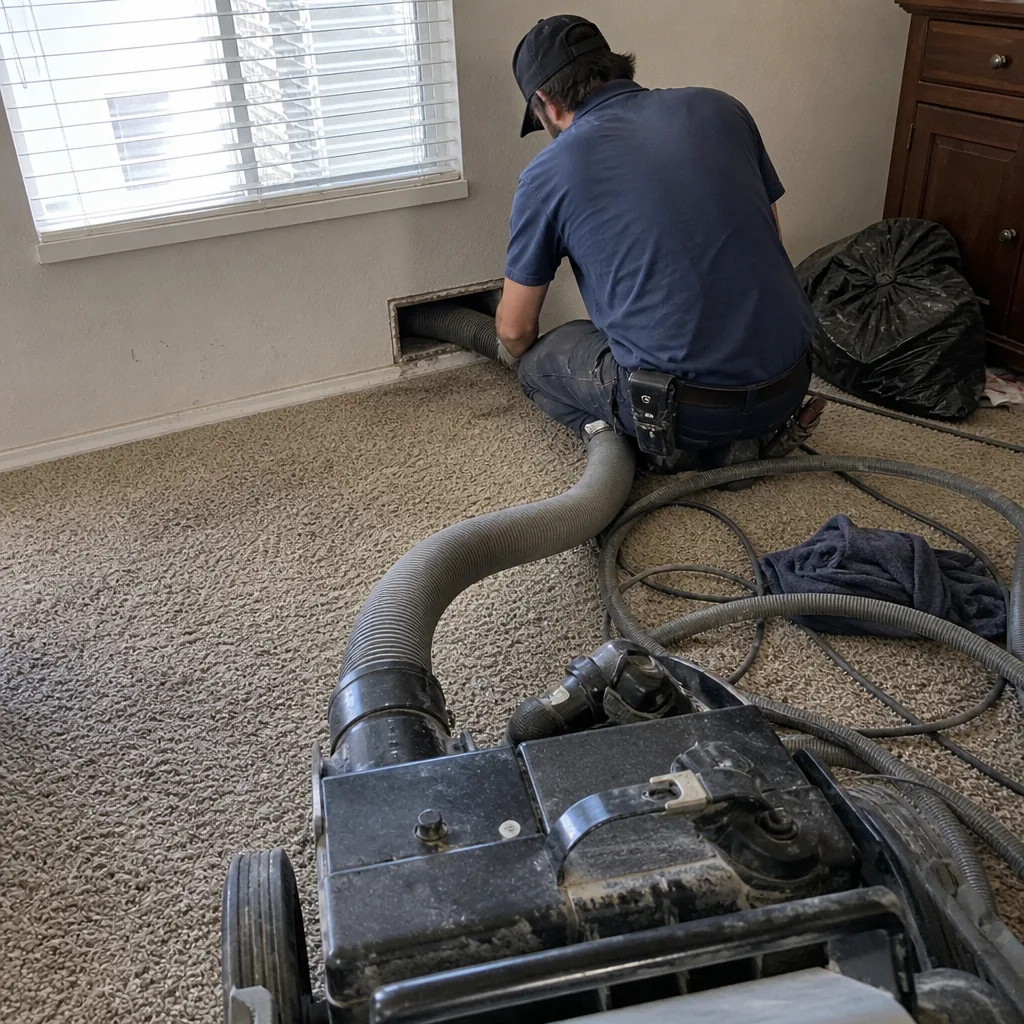 Before
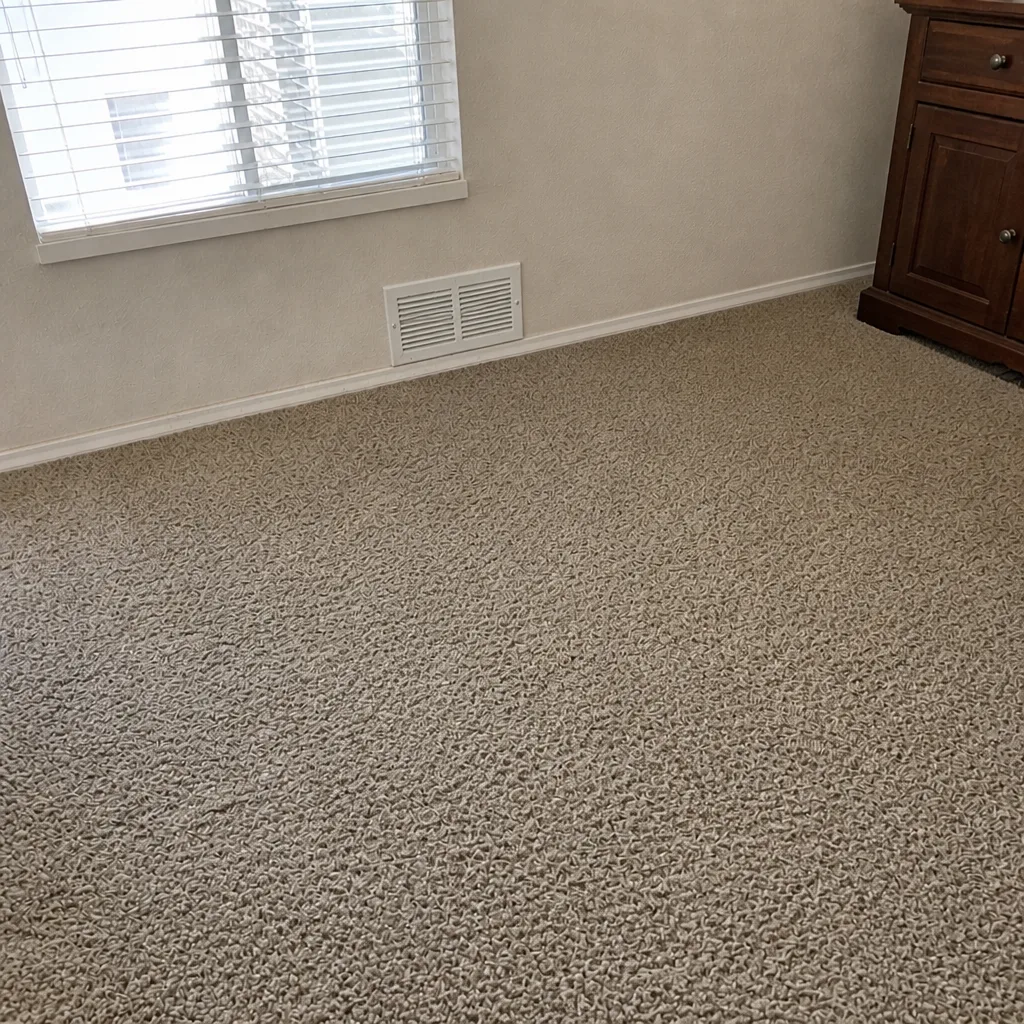 After
When to Call a Professional
Call a professional when you see dust streaking around the registers, when the furnace gives off a dusty or musty smell the first time it runs, when one room always feels starved of air, or when an allergy flare-up tracks with the heating season. Call sooner if a renovation has just finished, if you’ve moved into a home with an unknown maintenance history, or if the dryer is taking two cycles to dry a load, which points to a clogged dryer vent worth clearing before it becomes a fire risk. Anything involving the furnace, coil, or electrical components should go to a trained technician, not a DIY attempt. Taylorsville Air Duct Cleaning Pros offers free estimates in Taylorsville – call (833) 468-5997. We answer 24/7. Fast dispatch from 7am to 7pm, Sunday through Friday.
Frequently Asked Questions
Duct cleaning is priced per system with a flat range quoted after an inspection, and the written estimate sets the final price. We don’t give a per-vent figure or a teaser coupon because those numbers turn into surprises on the invoice. Call (833) 468-5997 for an exact quote, estimates are free.
Cheap quotes usually reflect a blow-out rather than source removal, or a per-vent price that grows once they see how many vents you have. A proper job includes inspection, negative-pressure rotary-brush cleaning, and air handler components, which a two-hour shop-vac visit can’t cover. Ask what the price includes before you book. Call (833) 468-5997 for an honest range.
Ask for before-and-after photos of your own ducts and run a flashlight check inside a register yourself; the duct wall should show clean metal or clean lining, not fresh dust. Look at the drain pan and blower too, and confirm a new filter is seated. If you can’t see the difference, the work wasn’t complete. Call (833) 468-5997 to book a service you can verify.
Every three to five years is a reasonable schedule for a Taylorsville forced-air home, and sooner if you have pets, live on a busy road, or have had a recent renovation. The winter inversion season adds particulate load, which pushes many homes to the shorter end. A good filter schedule between cleanings keeps the ducts clean longer. Call (833) 468-5997 for an estimate.
It can reduce the particulate load your system distributes, especially when paired with a proper filter and sanitizing step, but it’s one part of indoor air quality rather than a cure. Homes near inversion-season hotspots see the biggest difference when filtration is improved alongside cleaning. Call (833) 468-5997 to talk through your system.
Yes, in most cases. Cleaning the ducts while leaving the coil, blower, and drain pan dirty means the air handler recontaminates the ducts the first time the system runs. A full-system clean includes both. Call (833) 468-5997 for an estimate that covers the whole system.
The Bottom Line
Real duct cleaning is a system-wide process: inspect first, treat the ducts with source-removal equipment, clean the air handler components, seal any leaks, and sanitize if the inspection calls for it. Anything less leaves the job half done. If you’ve been quoted a per-vent price or a coupon that grows on site, you’ve been quoted a surface wipe-down. Understand what a full-system clean includes, know how to verify it, and you’ll be able to tell the difference before you pay. For air quality you can measure, not just feel, the right process is the whole point.
Ready for a real look at your system? Call (833) 468-5997 for a free estimate. We answer 24/7. Fast dispatch from 7am to 7pm, Sunday through Friday. Learn more about Taylorsville Air Duct Cleaning Pros and the full scope of what we do.
Written by the team at Taylorsville Air Duct Cleaning Pros.